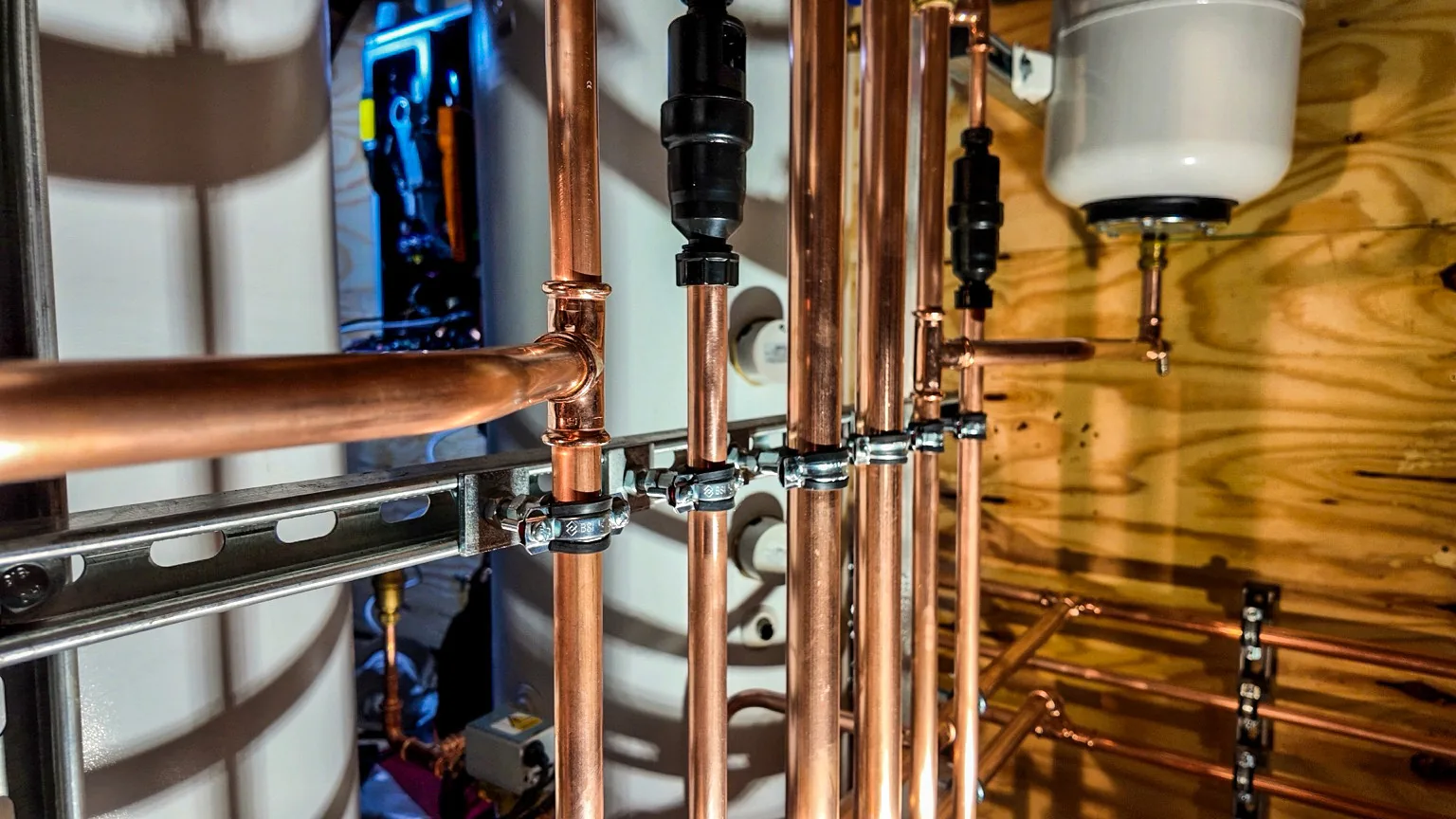
Commercial gas systems
Commercial gas appliance, distribution and plant support, including surveys and agreed installation or alteration work with safety, testing and isolation requirements defined.
Learn more about Commercial gas systems
Engineering support for production environments where plant condition, safe isolation, process continuity and clear records matter.
Industrial and manufacturing premises bring together production equipment, process services, workshops, warehouses, offices, welfare areas and loading operations. Building-services work must be engineered around the production schedule and the consequences of isolating gas, water, heat, ventilation, power or controls. ComGas Services UK Ltd is a Farnham-based Building Services Contractor, established in 2019, serving commercial and domestic buildings across Surrey and the surrounding southern counties.
We also handle commercial gas, heating and boilers, plumbing and commercial pipework, mechanical and electrical services, HVAC, air conditioning, BMS, plant rooms, water heaters, commercial catering gas, temporary heating, renewables, heat pumps and oil. We also support gas testing, tightness testing, purging and decommissioning. Process design, specialist machinery responsibility and production controls must be identified separately so the engineering scope remains safe and clear.
We can support defined building-services packages and coordinate interfaces with the client’s production, engineering and health-and-safety teams. Specialist process systems should be identified in the enquiry.
Commercial gas appliance, distribution and plant support, including surveys and agreed installation or alteration work with safety, testing and isolation requirements defined.
Learn more about Commercial gas systemsBoiler, heating, pumps, controls and plant-room support for workshops, warehouses, production support areas and offices, planned around operational constraints.
Learn more about Heating and boilersPipework and plumbing support for building utilities, welfare areas, hot water and identified mechanical interfaces, with materials and design responsibility confirmed in the scope.
Learn more about Commercial pipeworkMechanical installation and maintenance for pumps, ventilation, distribution and plant interfaces, coordinated with access, lifting, isolation and production requirements.
Learn more about Mechanical servicesElectrical work associated with building plant, controls, distribution and alterations, with testing, shutdown and permit arrangements agreed with the site team.
Learn more about Electrical installationHeating, ventilation and cooling support for production-adjacent, warehouse, office and equipment areas, subject to the process and environmental brief.
Learn more about HVAC and air conditioningTightness testing, purging, gas testing and decommissioning for new, altered, redundant or relocated gas supplies, with responsibilities for isolation and reinstatement recorded.
Learn more about Gas testing, purging and decommissioningPPM and maintenance-contract options for agreed assets, checks, reporting and remedial escalation, helping the engineering team plan work before it becomes a production interruption.
Learn more about Planned maintenanceA manufacturing brief needs more than an equipment list. It should explain the process, interfaces, isolation philosophy, site hazards and what a failure means to people, product, plant and delivery commitments.
Identify production windows, critical services, controlled shutdown and restart steps, clean-down requirements, shift patterns and contingency arrangements. Temporary heating may be considered for suitable spaces, but cannot guarantee process continuity.
Map gas meters, regulators, pipework, appliance trains, ventilation, flues, combustion equipment and emergency isolation. Alterations require clear responsibility for design, testing, purging, commissioning and return to service.
Define the medium, pressure, temperature, materials, route, supports, valves, drains, insulation, hygiene requirements and interaction with machinery. Confirm where specialist process-pipework design or certification sits.
Assess general ventilation, local exhaust, make-up air, process heat, dust or vapour concerns and worker comfort. The solution needs to reflect the hazard assessment and the actual production process, not just room volume.
BMS, plant controls, alarms and metering can improve visibility of boiler, HVAC and utility performance. Confirm the existing controls platform, network access, cybersecurity rules and who owns the control strategy.
Provide safe access, isolation points, lifting routes, labels, service clearances and realistic spare-part planning. A system that cannot be maintained without disrupting production may create a larger operational risk than its initial cost suggests.
The following details help separate building-services work from process engineering and allow a safer method and more realistic programme to be developed.
Describe production, storage, workshops, welfare, offices, shifts and critical processes. Mark hazardous areas, restricted zones, hygiene-controlled spaces, traffic routes and areas requiring permits or escorts.
Provide drawings, P&IDs where relevant, appliance schedules, gas and electrical information, pressures, temperatures, controls details, service history and known defects. Identify information that still needs verification.
State who controls lock-off, permits, gas isolation, electrical isolation, process shutdown, restart and product release. Include the test or inspection required before the system returns to service.
List blackout dates, shift changes, clean-down periods, stock movement, delivery access, lifting capacity, noise or dust restrictions and the cost of an unplanned outage to help prioritise options.
Share asbestos information, COSHH or DSEAR considerations, confined-space issues, work-at-height controls, hot-work requirements and contractor induction rules. The site risk assessment remains the client’s responsibility.
Define asset labels, commissioning records, test certificates where applicable, operating instructions, spare parts, training, red-line drawings and the defect close-out process before work starts.
Industrial clients may need to coordinate duties under the Health and Safety at Work etc. Act, gas-safety requirements, PUWER, COSHH, DSEAR, pressure-systems rules, work-at-height controls, asbestos management and fire precautions, depending on the site and activity. HSE guidance is an important starting point, but it does not replace a site-specific assessment, competent process engineer, hazardous-area assessment or permit system. ComGas delivers the agreed building-services scope and interfaces with the client’s controls.
ComGas is Gas Safe Registered, OFTEC Registered and REFCOM F-Gas Certified, and also holds CHAS Accreditation, Constructionline Approval, Commercial and Domestic ACS, OFTEC Engineers, Heat Pump Qualifications, WRAS/Water Regulations, Commercial Pipework, Commercial Catering and Commercial Testing & Purging credentials. The relevant credential must match the appliance, refrigerant, fuel, pipework or testing task; no blanket capability is implied for specialist production machinery or hazardous-area work.
For planned or urgent work, we can help define isolation, testing, commissioning, access and record requirements.
Need an answer for a specific site? Send us the address, building use and systems involved.
Contact ComGasWe can plan agreed building-services work around production windows, access and isolation arrangements. The client must confirm shutdown, permit and restart authority.
We can scope commercial pipework and building-services interfaces. Specialist process design, machinery, hazardous-area systems and production responsibility must be identified so the correct competent parties are involved.
Gas testing, tightness testing, purging and decommissioning support can be considered for an agreed scope. The appliance, pipework, pressure, isolation plan, testing standard and return-to-service responsibilities need to be established first.
Temporary boiler or heating support may be suitable for some building areas. It depends on load, fuel, distribution, ventilation, access, duration and safety controls and should not be treated as a guarantee for production continuity.
Provide the site and process description, utilities drawings, asset schedule, service records, gas and electrical details, controls information, isolation arrangements, hazards, access constraints and the operational cost of downtime.
We can discuss PPM or maintenance-contract support for agreed assets and reporting. Frequencies, exclusions, response arrangements, specialist interfaces and remedial approval routes should be documented in the contract.
What our customers say on Google.
Rated 5.0 out of 5 from 75 Google reviews.
"Really happy with the service! Matt came out to carry out our boiler service and was friendly, professional and did a great job."
Kerryann, Google review, September 2026
"First time we've used this company and it won't be the last. Very professional and efficient in everything they do…"
Ian, Google review, June 2026
"…ended up coming to my place of work and sorting an old heating system that hadn't worked for years in a car showroom & workshop. Great team of guys"
James, Google review, October 2025
Share the process profile, utilities, asset information, shutdown constraints and site controls. ComGas can help identify the building-services scope, survey requirements and sensible next steps from our Farnham base.
For an urgent enquiry, please call our office directly.
Current accreditations and registrations.
Message the ComGas office on 01252 214120.